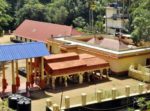
Temple Name:
Alternate Spellings:
Sree Dharma Sastha Temple. Aryankavu Ayyappa Temple
Listing Category
Significance:
For matrimonial boons | For relief from Sani Dosham
Location:
Aryankavu
Address:
8 Aeker, Karimpinthottam, Aryankavu (PO), NH744, Aryankavu, Puliyarai R.F. Part, Kerala
691309
691309
District:
Kollam
Google Tag:
8.976493, 77.1513
Phone No:
0475 221 1566
Temple Timings:
Morning:6:00 AM to 11:00 PM Evening: 5:00 PM to 8:00 PM
Temple Type:
Dewaswom
Presiding deity:
Lord Ayyappa | Lord Sastha
Sub Deities:
Valiyakadutha, Karuppaswami and Karuppayiamma
Festivals:
The temple has two main annual festivals mainly the Mandalapooja and Thirukalyanam (10th Dhanu).
The other noted festivals of the temple are Painguni Uthiram and Kumbhabhishekam.
The other noted festivals of the temple are Painguni Uthiram and Kumbhabhishekam.
History:
In prior days the Sourashtrians sold silk dresses to the Travancore ruler. One such specialist went to offer silk dresses to Travancore with his virgin little girl. On his way he achieved Aryankavu by night, so he needed to stay there.The next morning in the wake of freshening up he was prepared to begin when his little girl asked for him that she needed to remain back there and continue appealing to the Lord Ayyappan. She was awed by the Lord and committed to him. The general population of the place likewise recommended not to bring his little girl with him, as it was a thick woods adventure and they guaranteed to deal with the young lady. The agent inspired by his little girl’s bhakti towards Lord Ayyappan left her accountable for an archakar in that temple.
In the wake of finishing his business in Travancore he returned towards Aryankavu. As he was nearing Aryankavu, a major one horned elephant came undermining towards him. The representative was frightfully perplexed of this sudden appearance of the elephant and began supplicating boisterously ‘Ayyappa help and spare me’. Around then a well-assembled seeker showed up abruptly and yelled towards the elephant to go. On hearing that the elephant left like an enchantment The specialist was inspired and advised to the seeker,” you have spared my life and my family like a divine being”. In a token of gratefulness, the agent gave a rich silk fabric to the seeker. The seeker wearing the fabric around his neck asked the businessperson ‘How would I look?’. The specialist answered ‘You resemble an excellent bridegroom’.On hearing this seeker asked him, “will you wed your girl to me.?” For that, the businessperson said “why not? you have spared my life and on the off chance that you wish I will wed my little girl to you”.The seeker felt exceptionally cheerful and told that he will meet the specialist at the Aryankavu temple and he vanished. The agent was shocked that how could an outsider realize that I had a girl for marriage and with disarray, he achieved Aryankavu temple.
In the meantime the temple’s archakar had a fantasy in which Lord Ayyappan showed up and said “awaken my lover, a sourashtra specialist, is holding up at the passageway of the temple. As indicated by his desire I have joined his little girl Pushkaladevi with me. The young lady who was in your care is presently my better half and she is in a statue frame on the left half of me in the temple. I will show up alongside Pushkaladevi from today. Consistently I need the agent and his group to come here and commend this day as our marriage celebration. After that the Archakar woke up from his fantasy and went to the temple alongside individuals. There he saw the businessperson. As he opened the temple entryway he saw every one of the lights of the temple lit and a little statue of Pushkaladevi was seen close to the Lord, both in a wedded stance. The silk fabric given by the agent to the seeker was found around the neck of Ayyappan. On observing that the agent realized that it was the god who had spared his life in the timberland now his little girl was hitched to the god.
Around the same time, the ruler of Trivandram had a fantasy in which the master told every one of the happenings and needed him to treat the Sourashtra specialist and his group as his “Sambanthis” and approached him to be the relative for Lord amid his marriage. The lord hurried to Aryankavu and felt happy that his fantasy was valid. He treated the businessperson regally. He additionally needed the agent to accompany his kin consistently and praise this celebration. The Lord requested that there ought to be an ‘Eleven-day stupendous celebration’ consistently and the traditions of the Sourashtra must be taken after for the marriage. So from that point onwards and till date, each year the Government of Kerala’s agents comes here as Lord’s relatives and the Sourashtra individuals as the sambanthi to the master, to celebrate. Consistently, on this occasion and all around finished Portrait of the last lord of Travancore, Balarama Varma is kept. Prior to this photograph, the engagement function happens. What’s more, in the temple, there is a 11-day celebration, with every day in the various stances of the ruler.
In the wake of finishing his business in Travancore he returned towards Aryankavu. As he was nearing Aryankavu, a major one horned elephant came undermining towards him. The representative was frightfully perplexed of this sudden appearance of the elephant and began supplicating boisterously ‘Ayyappa help and spare me’. Around then a well-assembled seeker showed up abruptly and yelled towards the elephant to go. On hearing that the elephant left like an enchantment The specialist was inspired and advised to the seeker,” you have spared my life and my family like a divine being”. In a token of gratefulness, the agent gave a rich silk fabric to the seeker. The seeker wearing the fabric around his neck asked the businessperson ‘How would I look?’. The specialist answered ‘You resemble an excellent bridegroom’.On hearing this seeker asked him, “will you wed your girl to me.?” For that, the businessperson said “why not? you have spared my life and on the off chance that you wish I will wed my little girl to you”.The seeker felt exceptionally cheerful and told that he will meet the specialist at the Aryankavu temple and he vanished. The agent was shocked that how could an outsider realize that I had a girl for marriage and with disarray, he achieved Aryankavu temple.
In the meantime the temple’s archakar had a fantasy in which Lord Ayyappan showed up and said “awaken my lover, a sourashtra specialist, is holding up at the passageway of the temple. As indicated by his desire I have joined his little girl Pushkaladevi with me. The young lady who was in your care is presently my better half and she is in a statue frame on the left half of me in the temple. I will show up alongside Pushkaladevi from today. Consistently I need the agent and his group to come here and commend this day as our marriage celebration. After that the Archakar woke up from his fantasy and went to the temple alongside individuals. There he saw the businessperson. As he opened the temple entryway he saw every one of the lights of the temple lit and a little statue of Pushkaladevi was seen close to the Lord, both in a wedded stance. The silk fabric given by the agent to the seeker was found around the neck of Ayyappan. On observing that the agent realized that it was the god who had spared his life in the timberland now his little girl was hitched to the god.
Around the same time, the ruler of Trivandram had a fantasy in which the master told every one of the happenings and needed him to treat the Sourashtra specialist and his group as his “Sambanthis” and approached him to be the relative for Lord amid his marriage. The lord hurried to Aryankavu and felt happy that his fantasy was valid. He treated the businessperson regally. He additionally needed the agent to accompany his kin consistently and praise this celebration. The Lord requested that there ought to be an ‘Eleven-day stupendous celebration’ consistently and the traditions of the Sourashtra must be taken after for the marriage. So from that point onwards and till date, each year the Government of Kerala’s agents comes here as Lord’s relatives and the Sourashtra individuals as the sambanthi to the master, to celebrate. Consistently, on this occasion and all around finished Portrait of the last lord of Travancore, Balarama Varma is kept. Prior to this photograph, the engagement function happens. What’s more, in the temple, there is a 11-day celebration, with every day in the various stances of the ruler.
Updated on:
05/07/2019 by Komal
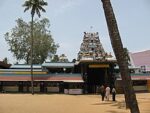
Temple Name:
Alternate Spellings:
Attukal Temple
Listing Category
Significance:
Sabarimala of Women
Location:
Attukal
Address:
Manacaud P.O, Thiruvananthapuram, Kerala
695009
695009
District:
Thiruvananthapuram
Google Tag:
8.47°N 76.96°E
Phone No:
+91-471 – 2463130 2456456
Website:
Email id:
attukal@vsnl.com
Temple Timings:
4:30 AM – 12:30 PM, 5:00 PM – 8:30 PM
Temple Type:
Other
If Other is Chosen, pls specify:
Temple Trust
Presiding deity:
Bhagavathy Bhadrakali / Durga/ Kannaki
Sub Deities:
LORD SHIVA | LORD GANAPATHI | LORD MADAN THAMPURAN | GOD NAGAR
Offerings:
The offering of Pongala is a special temple practice prevalent in the southern part of Kerala and some parts of Tamilnadu.
Festivals:
The Pongala Mahotsavam is the most important festival of Attukal Bhagavathy Temple.
Kuthiyottam - Kuthiyottam performed by boys with the hope that the Goddess almighty would be pleased to bestow on them beauty inward and outward, health, wealth and happiness. Boys below the age of 12years make the offering of Kuthiyottam.
Thalappoli
Thalappoli by girls are popular rituals made on the pongala day. A stream of young girls below 12 years. dressed in traditional attire holding Thalappoli starts very early in the morning with the hope that the Goddess almighty would be pleased to bestow on them beauty inward and outward, health, wealth and happiness.
Vilakkukettu
Vilakkukettu as nercha reaches in Temple during night from 1st to 9th day of Pongala festival. One of the most spectacular sight of the festival is the vilakkukettu, in which beautifully decorated structures bearing idols and pictures of the Goddess are carried in the heads of the devotees, as they way to the temple from different parts of the city every night of festival accompanied by chendamelam music etc.
The Divine Procession
Other Festivals:
1. Mandala Vratham - Festival in connection with the annual Utsavam of Sabarimala
2. Vinayaka Chathurthi - Pooja to the Lord Ganapathy
3. Pooja Vaypu
4. Sivarathri - Siva Pooja- Special poojas are arranged in Siva Temple.
5. Karthika - (Devi's star) in November - December - Karthika Deepam
6. Ayilya Pooja - Milk, flowers etc. offered to serpent God and special rites.
7. Aiswarya Pooia - On all fullmoon (Pournarni) days
8. Nirayum Puthariyum (Ramayana Parayanam)
9. Akhandanama Japam - 4th Sunday of every month
10. Ramayana Parayanam- During Karkadakam.
11. VISHU: This is on Malayalam month medam 1st , Vishukanni is arranged in the Temple.
12. Sahasrakalasham - This pooja is done during March/April. Devotees can book for different types of kalasham as vazhipaud during this pooja.
13. Narayaneeyam
14. Geetha Class and Geetha teaching class
Kuthiyottam - Kuthiyottam performed by boys with the hope that the Goddess almighty would be pleased to bestow on them beauty inward and outward, health, wealth and happiness. Boys below the age of 12years make the offering of Kuthiyottam.
Thalappoli
Thalappoli by girls are popular rituals made on the pongala day. A stream of young girls below 12 years. dressed in traditional attire holding Thalappoli starts very early in the morning with the hope that the Goddess almighty would be pleased to bestow on them beauty inward and outward, health, wealth and happiness.
Vilakkukettu
Vilakkukettu as nercha reaches in Temple during night from 1st to 9th day of Pongala festival. One of the most spectacular sight of the festival is the vilakkukettu, in which beautifully decorated structures bearing idols and pictures of the Goddess are carried in the heads of the devotees, as they way to the temple from different parts of the city every night of festival accompanied by chendamelam music etc.
The Divine Procession
Other Festivals:
1. Mandala Vratham - Festival in connection with the annual Utsavam of Sabarimala
2. Vinayaka Chathurthi - Pooja to the Lord Ganapathy
3. Pooja Vaypu
4. Sivarathri - Siva Pooja- Special poojas are arranged in Siva Temple.
5. Karthika - (Devi's star) in November - December - Karthika Deepam
6. Ayilya Pooja - Milk, flowers etc. offered to serpent God and special rites.
7. Aiswarya Pooia - On all fullmoon (Pournarni) days
8. Nirayum Puthariyum (Ramayana Parayanam)
9. Akhandanama Japam - 4th Sunday of every month
10. Ramayana Parayanam- During Karkadakam.
11. VISHU: This is on Malayalam month medam 1st , Vishukanni is arranged in the Temple.
12. Sahasrakalasham - This pooja is done during March/April. Devotees can book for different types of kalasham as vazhipaud during this pooja.
13. Narayaneeyam
14. Geetha Class and Geetha teaching class
History:
Mythological Background
The story goes that the Goddess Bhagavathy revealed herself to a fervent devotee of a notable family viz. Mulluveettil family. It is said that one evening a young girl appeared before the head of the family while he was performing his oblations in the Killi river and requested him to help her cross the river. Impressed by her charismatic demeanour, the- old man bent before her with awe and reverence and not only helped her cross the river but took her to his house nearby. Strangely enough, while the household members were amidst preparations for intending a warm welcome to the young girl, she vanished. That very night she appeared as an icon before the old man in his dream and demanded that he should establish an abode for her in the nearby sacred ground of shrubs and herbs (kavu), at a consecrated spot marked by three lines. The next morning the old man went to the spot revealed to him in the dream and to his great surprise he did find three marks indented on the ground.
He lost no time in erecting a temple on this consecrated spot to house the Goddess. Many years later, the building was renovated by the local devotees. They also installed a beautiful and majestic icon of the Deity with four arms, bearing weapons of destruction in each, like spear, sword, shield etc. The consecration ceremony of this Exalted Being was performed by no less a person than the high priest of the Badarinath Temple.
The Attukal Bhagavathy Temple, one of the ancient temples of South India, is popularly described as Sabarimala of the Women, as women form the major portion of devotees. The Goddess in the temple of Attukal is worshipped as the Supreme Mother, creator of all living beings and the mighty preserver as well as destroyer of them all. The pilgrims from all over the country, who visit Sree Padmanabha Swamy Temple and worship the Lord, do not consider their visits complete without the visit to the shrine of the supreme Mother Attukalamma. Vishnumaya took the incarnation of Bhagavathy to annihilate the evil and protect the good in the world in the present Era namely Kaliyuga.
Attukal Bhagavathy is supposed to be the divinised form of Kannaki, the famous heroine of Chilapathikaram, written by Elenkovadikal,the Tamil Poet. The story goes that after the destruction of ancient city of Madurai, Kannaki left the city and reached Kerala via Kanyakumari and on the way to Kodungalloor took a sojourn at Attukal.
Kannaki is supposed to be the incarnation of Parvathy, the consort of Paramasiva. The all powerful and benign Attukal Bhagavathy reigns eternally supreme at Attukal and nurses devotees as a mother does her children. Thousands of devotees from far and near flock to the Temple to bend before the Goddess with awe and reverence to prostrate and redress their affliction and agony.
The story goes that the Goddess Bhagavathy revealed herself to a fervent devotee of a notable family viz. Mulluveettil family. It is said that one evening a young girl appeared before the head of the family while he was performing his oblations in the Killi river and requested him to help her cross the river. Impressed by her charismatic demeanour, the- old man bent before her with awe and reverence and not only helped her cross the river but took her to his house nearby. Strangely enough, while the household members were amidst preparations for intending a warm welcome to the young girl, she vanished. That very night she appeared as an icon before the old man in his dream and demanded that he should establish an abode for her in the nearby sacred ground of shrubs and herbs (kavu), at a consecrated spot marked by three lines. The next morning the old man went to the spot revealed to him in the dream and to his great surprise he did find three marks indented on the ground.
He lost no time in erecting a temple on this consecrated spot to house the Goddess. Many years later, the building was renovated by the local devotees. They also installed a beautiful and majestic icon of the Deity with four arms, bearing weapons of destruction in each, like spear, sword, shield etc. The consecration ceremony of this Exalted Being was performed by no less a person than the high priest of the Badarinath Temple.
The Attukal Bhagavathy Temple, one of the ancient temples of South India, is popularly described as Sabarimala of the Women, as women form the major portion of devotees. The Goddess in the temple of Attukal is worshipped as the Supreme Mother, creator of all living beings and the mighty preserver as well as destroyer of them all. The pilgrims from all over the country, who visit Sree Padmanabha Swamy Temple and worship the Lord, do not consider their visits complete without the visit to the shrine of the supreme Mother Attukalamma. Vishnumaya took the incarnation of Bhagavathy to annihilate the evil and protect the good in the world in the present Era namely Kaliyuga.
Attukal Bhagavathy is supposed to be the divinised form of Kannaki, the famous heroine of Chilapathikaram, written by Elenkovadikal,the Tamil Poet. The story goes that after the destruction of ancient city of Madurai, Kannaki left the city and reached Kerala via Kanyakumari and on the way to Kodungalloor took a sojourn at Attukal.
Kannaki is supposed to be the incarnation of Parvathy, the consort of Paramasiva. The all powerful and benign Attukal Bhagavathy reigns eternally supreme at Attukal and nurses devotees as a mother does her children. Thousands of devotees from far and near flock to the Temple to bend before the Goddess with awe and reverence to prostrate and redress their affliction and agony.
Updated on:
05/07/2019 by Komal
Temple Name:
Alternate Spellings:
Avanamcode Saraswathy Swayambu Kshethram
Listing Category
Significance:
Vidyarambham can be done here everyday. Avanamkode Saraswati Temple is a famous Swayambhu Saraswati Temple, one of the 108 temples dedicated to Goddess Durga built by Parasurama.
Location:
Avanamcode (Near Kochi International Airport
Address:
Avanamkodu Devaswam Kerala Kshethra Seva Trust, Near Nedumbassery Airport, Chowara, Avanamkodu Edanad Road, Nedumbassery, Kerala
683571
683571
District:
Ernakulam
Phone No:
9846151002 | 9446061160
Email id:
avanamcodetemple@gmail.com
Temple Timings:
05:30 AM - Opening Time 10:30 AM - Closing Time 05:30 PM - Opening Time 07:15 PM - Closing Time
Temple Type:
Dewaswom
Presiding deity:
Goddess Saraswathi
Sub Deities:
Guru Dakshinamoorthy, Lord Ganesh
Offerings:
Navu-Mani-Narayam (tongue-bell-traditional pen) offering is the unique offering which can be done only at this temple. It can be offered by any devotee and done especially by students and artistes; it's purpose is to acquire enhanced skills for orating, listening and writing.
Jaggery, Oil, Rice offerings; Jaggery and Ghee Payasam Nivedyam; Lotus Garland offerings are important offerings. Saraswath Ghee, an ayurvedic ghee enchanted by Saraswath Mantra is unique to this temple and is available around the calendar year. Saraswathi Pooja, Vidyavagheeshwari Pooja and Janma Nakshathra Pooja, important poojas for education, prosperity, and professional success can be booked in advance. Passport Pooja for success abroad can also be done here.
Jaggery, Oil, Rice offerings; Jaggery and Ghee Payasam Nivedyam; Lotus Garland offerings are important offerings. Saraswath Ghee, an ayurvedic ghee enchanted by Saraswath Mantra is unique to this temple and is available around the calendar year. Saraswathi Pooja, Vidyavagheeshwari Pooja and Janma Nakshathra Pooja, important poojas for education, prosperity, and professional success can be booked in advance. Passport Pooja for success abroad can also be done here.
Festivals:
Navarathri, Basant Panchami, Pooram, Araattu, Karthika Lights and Prathishta Divas are important festive events. Kidangasseri Tharananellur Raman Namboothirippad is the temple Thanthri.
Mudiyettu is a traditional ritual theatre and folk dance drama recognized by UNESCO enacts the tale of a battle between the goddess Kali and the demon Darika. It is performed in front of the Goddess Bhadrakali at Ramanchira Temple.
Avanamcode Pooram happens in the Meenam month, which usually falls during March/April. The 10 days long Pooram Festival includes special tantric poojas led by chief temple priest, special poojas, kodiyettu, aaraattu, pooram, manakkal pooram, cultural programmes, etc. . Decades back, Pooram from Avanamcode temple used to join the famous Arattupuzha Pooram.
Pooram Festival begins with Kodiyettu, the hoisting of the holy flag. The ceremony of cutting an Areca Palm tree suitable for making a flagpole, taking it to the soil of the Devaswam in the south-east part of the village chanting the name of the goddess, and then taking it around the village, finally bringing it to the temple through the west gate is a very ancient ritual unique to this temple. Once placed inside the temple, a member of the Avanamcode Carpenter family converts it into a flag pole. It is decorated with banyan tree leaves and mango tree leaves. Village folk will then bury it in front of the temple. After tantric pooja by the chief temple priest, the holy flag is hoisted which kicks off the Pooram Festival. In 2024, Kodiyettu happens on March 16.
Based on a mythical battle between the goddess Kali and the demon Darika, Mudiyettu is a ritual dance drama from Kerala. It is a local area custom wherein the whole town takes part. On a specific day, the villagers arrive at the temple early in the morning after the harvest of the summer crops. Mudiyettu performers purify themselves by fasting and praying, and then they use colored powders to draw a huge image of the goddess Kali, known as kalam, on the floor of the temple, where the goddess's spirit is invoked. This readies the ground for the vivacious authorization to follow, in which the heavenly sage Narada begs Shiva to contain the evil presence Darika, who is resistant to overcome by humans. Shiva rather orders that Darika will pass on because of the goddess Kali.
Mudiyettu is performed every year in 'Bhagavati Kavus', the sanctuaries of the goddess, in various towns along the waterways Chalakkudy Puzha, Periyar, and Moovattupuzha. Shared collaboration and aggregate cooperation of every station in the custom imparts and reinforces normal personality and common holding locally. Elders and senior performers are responsible for passing it on to younger generations, who serve as apprentices during the performance. Mudiyettu fills in as a significant social site for transmitting customary qualities, morals, moral codes, and tasteful standards of the local area to the future, guaranteeing its congruity and importance in present times.
At Avanamcode Saraswathi Temple, Mudiyettu is performed in front of the subsidiary temple, Ramanchira Bhadrakali Temple. Renowned Mudiyettu artist, Varanattu Shankara Narayana Kuruppu performs this ritualistic art form at the temple. It is performed every year during the Pooram Festival. Devotees can become a part of this ritual by offering this ritual in their name.
Basant Panchami is celebrated every year on the fifth day of the bright half of the Hindu lunisolar calendar month of Magha. The festival is particularly observed by Hindus in the Indian subcontinent, notably India and Nepal. It is the birthday of Ma Saraswathi, the Goddess of knowledge, Arts and Music. Avanamcode Saraswathi Temple, Nedumbassery is the only temple in Kerala where this festival is celebrated.
This is the perfect day to start new Investments, Business, Vidyarambham, Choroonu, etc. This year, Basant Panchami falls on 14 February 2024, Wednesday.
Mudiyettu is a traditional ritual theatre and folk dance drama recognized by UNESCO enacts the tale of a battle between the goddess Kali and the demon Darika. It is performed in front of the Goddess Bhadrakali at Ramanchira Temple.
Avanamcode Pooram happens in the Meenam month, which usually falls during March/April. The 10 days long Pooram Festival includes special tantric poojas led by chief temple priest, special poojas, kodiyettu, aaraattu, pooram, manakkal pooram, cultural programmes, etc. . Decades back, Pooram from Avanamcode temple used to join the famous Arattupuzha Pooram.
Pooram Festival begins with Kodiyettu, the hoisting of the holy flag. The ceremony of cutting an Areca Palm tree suitable for making a flagpole, taking it to the soil of the Devaswam in the south-east part of the village chanting the name of the goddess, and then taking it around the village, finally bringing it to the temple through the west gate is a very ancient ritual unique to this temple. Once placed inside the temple, a member of the Avanamcode Carpenter family converts it into a flag pole. It is decorated with banyan tree leaves and mango tree leaves. Village folk will then bury it in front of the temple. After tantric pooja by the chief temple priest, the holy flag is hoisted which kicks off the Pooram Festival. In 2024, Kodiyettu happens on March 16.
Based on a mythical battle between the goddess Kali and the demon Darika, Mudiyettu is a ritual dance drama from Kerala. It is a local area custom wherein the whole town takes part. On a specific day, the villagers arrive at the temple early in the morning after the harvest of the summer crops. Mudiyettu performers purify themselves by fasting and praying, and then they use colored powders to draw a huge image of the goddess Kali, known as kalam, on the floor of the temple, where the goddess's spirit is invoked. This readies the ground for the vivacious authorization to follow, in which the heavenly sage Narada begs Shiva to contain the evil presence Darika, who is resistant to overcome by humans. Shiva rather orders that Darika will pass on because of the goddess Kali.
Mudiyettu is performed every year in 'Bhagavati Kavus', the sanctuaries of the goddess, in various towns along the waterways Chalakkudy Puzha, Periyar, and Moovattupuzha. Shared collaboration and aggregate cooperation of every station in the custom imparts and reinforces normal personality and common holding locally. Elders and senior performers are responsible for passing it on to younger generations, who serve as apprentices during the performance. Mudiyettu fills in as a significant social site for transmitting customary qualities, morals, moral codes, and tasteful standards of the local area to the future, guaranteeing its congruity and importance in present times.
At Avanamcode Saraswathi Temple, Mudiyettu is performed in front of the subsidiary temple, Ramanchira Bhadrakali Temple. Renowned Mudiyettu artist, Varanattu Shankara Narayana Kuruppu performs this ritualistic art form at the temple. It is performed every year during the Pooram Festival. Devotees can become a part of this ritual by offering this ritual in their name.
Basant Panchami is celebrated every year on the fifth day of the bright half of the Hindu lunisolar calendar month of Magha. The festival is particularly observed by Hindus in the Indian subcontinent, notably India and Nepal. It is the birthday of Ma Saraswathi, the Goddess of knowledge, Arts and Music. Avanamcode Saraswathi Temple, Nedumbassery is the only temple in Kerala where this festival is celebrated.
This is the perfect day to start new Investments, Business, Vidyarambham, Choroonu, etc. This year, Basant Panchami falls on 14 February 2024, Wednesday.
History:
Adi Sankaracharyar began his journey into the world of knowledge from here. When he was a young boy, he visited this temple near to his birthplace, Kalady, with his mother and wrote the holy first letters "Harishree Ganapathaye Namaha" and "Saraswathi Namasthubhyam" on rice grains. Later, he visited the temple on his journey to other parts of India to establish Mutts.
Vidyarambham can be done here everyday. Inside the small cave under the mantap, next to the Simha Vahana sits Guru Dakshinamoorthy & Lord Ganesh facing Goddess Saraswathi. There is regular pooja for the Simha Vahana which is unique to this temple.
It was the Lord Parassurama who identified the divine presence of Saraswathi in the Swayambhu (self-revealing) Shila (stone) and established the Saraswathi Temple during his visit to Avanamcode. Hence, the temple became one of the 108 Durga temples established by Lord Parassurama. A light is placed above the mantap where it is believed Lord Parassurama sits and meditates.
Dharma Shastha Temple and Bhadrakali Temple are subsidiary temples located outside the temple walls and are collectively called the the Ramanchira Temple. Kettunira is held at the Dharmma Shastha Temple during the Sabarimala Season. This is also the nearest temple to the Cochin International Airport which offer this service.
Centuries ago, there was a temple pond named Ramanchira and a temple next to it. It was located somewhere where the present airport is located. Centuries ago, this temple got destroyed and the pond was filled with mud. And it was only centuries later that the remains of the Ramanchira pond were found, along with the figures of Bhadrakali and Dharma Shasta. Later, the Ramanchira Temple was built and both deities were enshrined in the temple.
Vidyarambham can be done here everyday. Inside the small cave under the mantap, next to the Simha Vahana sits Guru Dakshinamoorthy & Lord Ganesh facing Goddess Saraswathi. There is regular pooja for the Simha Vahana which is unique to this temple.
It was the Lord Parassurama who identified the divine presence of Saraswathi in the Swayambhu (self-revealing) Shila (stone) and established the Saraswathi Temple during his visit to Avanamcode. Hence, the temple became one of the 108 Durga temples established by Lord Parassurama. A light is placed above the mantap where it is believed Lord Parassurama sits and meditates.
Dharma Shastha Temple and Bhadrakali Temple are subsidiary temples located outside the temple walls and are collectively called the the Ramanchira Temple. Kettunira is held at the Dharmma Shastha Temple during the Sabarimala Season. This is also the nearest temple to the Cochin International Airport which offer this service.
Centuries ago, there was a temple pond named Ramanchira and a temple next to it. It was located somewhere where the present airport is located. Centuries ago, this temple got destroyed and the pond was filled with mud. And it was only centuries later that the remains of the Ramanchira pond were found, along with the figures of Bhadrakali and Dharma Shasta. Later, the Ramanchira Temple was built and both deities were enshrined in the temple.
Updated on:
01 June 2024. Credits to temple website and e-kshetra.com
Temple Name:
Alternate Spellings:
Aykunnu Pandavagiri Devi Temple
Significance:
This temple is said to be one of the 108 Durga temples consecrated by Parashurama. The name Paandavagiri, by which it is also known, comes from the legend that the Pandavas stayed here for a period of time during their exile. The deity here (Durga Devi or Bhagavathy) is a participant of the famous Aaruttupuzha Pooram.
Location:
Venginissery
Address:
F5FX+234, Venginissery, Paralam, Kerala
680563
680563
District:
Thrissur
Google Tag:
10.4724747209141, 76.19760252969543
Phone No:
0487 2277702
Temple Timings:
6:15–10am, 5:15–7:15pm
Temple Type:
Dewaswom
Presiding deity:
Bhagavathy or Durga Devi
Sub Deities:
Shree Dharmmashastaav
Offerings:
Draupadi dinam (Draupadi day):
12th May
1. Pattum taaliyum (For mangalya saubhagya) - Rs 300/-
2. Pudava, vaalkannadi (For nedumangalya siddhi) - Rs 350/-.
3. Ashtalakshmi taamboola samarpanam (For ashtaiswarya praapti) - Rs 400/-
4. Naarangaa vilakku (For satrudosha shanti and uddishtakaaryasiddhi) - Rs 15/-.
5. Pattu chaarthal - Rs 50/-.
6. Udyaasthamana pooja (Full day’s) - Rs18000/-.
7. Manjal para (For nedumangalya and mangalya, and roga samanam) - Rs 250/-.
8. Brahmani paattu (For nedumangalya and mangalya) - Rs 100/-
12th May
1. Pattum taaliyum (For mangalya saubhagya) - Rs 300/-
2. Pudava, vaalkannadi (For nedumangalya siddhi) - Rs 350/-.
3. Ashtalakshmi taamboola samarpanam (For ashtaiswarya praapti) - Rs 400/-
4. Naarangaa vilakku (For satrudosha shanti and uddishtakaaryasiddhi) - Rs 15/-.
5. Pattu chaarthal - Rs 50/-.
6. Udyaasthamana pooja (Full day’s) - Rs18000/-.
7. Manjal para (For nedumangalya and mangalya, and roga samanam) - Rs 250/-.
8. Brahmani paattu (For nedumangalya and mangalya) - Rs 100/-
Festivals:
1. Panchadurga Pooja
In the special Panchadurga Pooja, Aykunnu Panadavagiri Durga Devi is uniquely worshipped in five of her aspects. The singularness of this worship is that by performing separate poojas for each of her five aspects – as Durga, Aaryaa, Devi, Bhagavati and as Kanyaka – the devotee is specially bestowed with her love and blessings. A ceremony associated with this pooja is the ritualistic washing of Brahmana’s feet and feeding him. This is believed to be greatly beneficial in redressing family problems, for begetting progeny, for mental peace, for family prosperity, for strength of mind for redress of poverty, family distress and such.
2. Mangalya Siddhi Pooja:
The temple management conducts the Mangalya Siddhi Pooja to Aykunnu Pandavgiri Devi, the bestower of the boon of auspiciousness, on Pooyam of every month on behalf of the devotees who register for it. This highly popular and efficient pooja is specially beneficial for gaining nedumangalyam, the blessing to outlive the husband, for gaining the desired person as spouse, for removing hindrances to marriage, and for gaining one’s desire etc.
The Mangalya Siddhi Pooja performed in the abode of Aykunnu Mother, where Draupadi was granted this boon of nedumangalya as well as victory in battle for her husbands, is said to be very fruitful. It was certainly due Devi’s grace that Draupadi shed her body after living her long life as a wedded wife before any of her husbands passed away – a feat that neither Sita Devi nor Rugmini Devi could achieve. This pooja which lasts for about an hour, begins at 9 in the morning. The cost is Rs 400 per devotee who offers the pooja. It is necessary to book the pooja in advance by making payment at the temple cash counter. On the Mangalya Siddhi Pooja day, special poojas for solution of problems concerning land properties, as well as the sarvaiswarya pooja for cure of diseases, are also performed. All such special offerings must be booked in advance at the temple counter by making payment and obtaining a receipt.
3. Aarattupuzha Pooram
Some interesting and revealing memoirs in connection with the temple and its participation in the famous Aarattupuzha pooram as recalled by elders of the place is given herebelow:
It is believed that in the olden days, the village deity Thiruvullakkavu sastha, installed a flag post and hoisted the flag in the North nada of temple on behalf of Aikkunnu Pandavagiri Devi, the Peruvanam village goddess. The flag used to be hoisted by the Nampoothiris of Peruvanam households. Subsequently this ritual came to be abandoned because of severe discord among the Nampoothiri households. However after the renovation and rejuvenation processes of the temple (by HNP) were completed in 1995, a permanent flag post was installed for Devi in the Pandavagiri Temple itself. This flag post is decoratively encased in gleaming brass sheath. Yet, the Pandavagiri Devi continues her practice of going formally to the Thirvullakkavu Temple, to take a round in circumambulation of Sastha and return.
4. The Peruvanam Pooram and Devi’s participation in it along with Cherpu Bhagavati:
In the olden days, the rights for the temple nada (entry gates) used to be held by the influential Nampoothiri households. The Eastern nada was under the control of the Poomulli Mana who were the owners of the Oorakattamma Thriuvadi while the rights for the Temple and its western nada was with the Chittoor Mana. The unhealthy competition between these manas to conduct the pooram festival, exceeded all bounds. It ultimately resulted in the blockade of nadas rightfully assigned to the Devi and Devas, thus preventing them from entering the temple for pooram. In one of the subsequent years, when it became apparent that the Nampoothiris of Chittoor mana would obstruct the respected Oorakathama Thiruvadi from going to the Pruvanam Kshetram for pradakshinam after the pooram, the Oorakam people accompanied by Chathukudam Sastha (whose ownership rested with the Desamangalam mana), entered the temple, performed the pradakshinam and completed the temple rituals. The next year, anticipating that the Cherpu Bhagavathi would be blockaded from entering through the eastern nada by the people of Poomulli mana (who owned that nada), the graama devata of Peruvanam accompanied by the equally adorable Aikunnu Bhagavati ceremoniously led the Cherpu Bhagavati for pooram through the eastern nada. Since then the joint ceremonial procession by Cherpu Bhagavathi and Aikunnu amma and the functions in aaraattupuzha, Todukulam and Mandaram kadavu, have become a regular feature. On the day the attam flag at Cherpu Bhagavati temple is hoisted, the Aikunnu amma goes to that Bhagavati Temple and conducts a solemn pradakshina before returning to her Aikunnam abode for the flag hoisting function in Devi’s own temple.
In the special Panchadurga Pooja, Aykunnu Panadavagiri Durga Devi is uniquely worshipped in five of her aspects. The singularness of this worship is that by performing separate poojas for each of her five aspects – as Durga, Aaryaa, Devi, Bhagavati and as Kanyaka – the devotee is specially bestowed with her love and blessings. A ceremony associated with this pooja is the ritualistic washing of Brahmana’s feet and feeding him. This is believed to be greatly beneficial in redressing family problems, for begetting progeny, for mental peace, for family prosperity, for strength of mind for redress of poverty, family distress and such.
2. Mangalya Siddhi Pooja:
The temple management conducts the Mangalya Siddhi Pooja to Aykunnu Pandavgiri Devi, the bestower of the boon of auspiciousness, on Pooyam of every month on behalf of the devotees who register for it. This highly popular and efficient pooja is specially beneficial for gaining nedumangalyam, the blessing to outlive the husband, for gaining the desired person as spouse, for removing hindrances to marriage, and for gaining one’s desire etc.
The Mangalya Siddhi Pooja performed in the abode of Aykunnu Mother, where Draupadi was granted this boon of nedumangalya as well as victory in battle for her husbands, is said to be very fruitful. It was certainly due Devi’s grace that Draupadi shed her body after living her long life as a wedded wife before any of her husbands passed away – a feat that neither Sita Devi nor Rugmini Devi could achieve. This pooja which lasts for about an hour, begins at 9 in the morning. The cost is Rs 400 per devotee who offers the pooja. It is necessary to book the pooja in advance by making payment at the temple cash counter. On the Mangalya Siddhi Pooja day, special poojas for solution of problems concerning land properties, as well as the sarvaiswarya pooja for cure of diseases, are also performed. All such special offerings must be booked in advance at the temple counter by making payment and obtaining a receipt.
3. Aarattupuzha Pooram
Some interesting and revealing memoirs in connection with the temple and its participation in the famous Aarattupuzha pooram as recalled by elders of the place is given herebelow:
It is believed that in the olden days, the village deity Thiruvullakkavu sastha, installed a flag post and hoisted the flag in the North nada of temple on behalf of Aikkunnu Pandavagiri Devi, the Peruvanam village goddess. The flag used to be hoisted by the Nampoothiris of Peruvanam households. Subsequently this ritual came to be abandoned because of severe discord among the Nampoothiri households. However after the renovation and rejuvenation processes of the temple (by HNP) were completed in 1995, a permanent flag post was installed for Devi in the Pandavagiri Temple itself. This flag post is decoratively encased in gleaming brass sheath. Yet, the Pandavagiri Devi continues her practice of going formally to the Thirvullakkavu Temple, to take a round in circumambulation of Sastha and return.
4. The Peruvanam Pooram and Devi’s participation in it along with Cherpu Bhagavati:
In the olden days, the rights for the temple nada (entry gates) used to be held by the influential Nampoothiri households. The Eastern nada was under the control of the Poomulli Mana who were the owners of the Oorakattamma Thriuvadi while the rights for the Temple and its western nada was with the Chittoor Mana. The unhealthy competition between these manas to conduct the pooram festival, exceeded all bounds. It ultimately resulted in the blockade of nadas rightfully assigned to the Devi and Devas, thus preventing them from entering the temple for pooram. In one of the subsequent years, when it became apparent that the Nampoothiris of Chittoor mana would obstruct the respected Oorakathama Thiruvadi from going to the Pruvanam Kshetram for pradakshinam after the pooram, the Oorakam people accompanied by Chathukudam Sastha (whose ownership rested with the Desamangalam mana), entered the temple, performed the pradakshinam and completed the temple rituals. The next year, anticipating that the Cherpu Bhagavathi would be blockaded from entering through the eastern nada by the people of Poomulli mana (who owned that nada), the graama devata of Peruvanam accompanied by the equally adorable Aikunnu Bhagavati ceremoniously led the Cherpu Bhagavati for pooram through the eastern nada. Since then the joint ceremonial procession by Cherpu Bhagavathi and Aikunnu amma and the functions in aaraattupuzha, Todukulam and Mandaram kadavu, have become a regular feature. On the day the attam flag at Cherpu Bhagavati temple is hoisted, the Aikunnu amma goes to that Bhagavati Temple and conducts a solemn pradakshina before returning to her Aikunnam abode for the flag hoisting function in Devi’s own temple.
History:
The Aikunnu Pandavagiri Devi Kshetram (Temple), situated in Venginisseri village of the Paralam panchayat, is most famous among the 108 Durga temples consecrated by Parasurama in the Treta Yuga.
Legend is that during their life in exile for twelve years in the forest, the Pandava princes accompanied by their wife Draupadi, stayed here and underwent severe austerities (tapas). Thereby they obtained the blessings of this Goddess of all auspiciousness, prosperity and benevolence. Additionally Drupadi, who prayed for victory to her husbands in battle and also for the boon of outliving her husbands in her life, is believed to have been granted her wishes. That is how with the blessings of our Devi, Draupadi could give up her body, as a wife, before her husbands could; a blessing that neither Sita Devi nor Rugmini could get. What other than our Devi’s grace brought about that!
It said believed that in the ancient past, many ascetics were engaged in practicing severe austerities here, in Pandavagiri hills, for long periods, even much before the Pandava princes came here to do penance.
The Pandavas later went their way after gaining Devi’s blessings and with feeling of complete fulfillment. In the course of time due to neglect the temple became old and decrepit. This sad state of decay could not be remedied even during the period when the temple owners themselves had managed its affairs. The situation worsened to such an extent that even the daily pooja could not be performed regularly. The worship literally stopped.
The presence of austere ascetics continues:
It was during the 1960s that Sampoojya Swami Bhoomananda Tirthaji Maharaj came to the Pandavagiri and built a rustic cottage on its eastern slopes to conduct his austere life along with his multifaceted work for uplift of society. We need not specially mention that this ancient holy ascetic land has become more blessed and divine due to the presence of Swamiji’s ascetic Narayanashrama Tapovanam and the lokasangraha work for welfare of the world associated with the ashram.
It is worth recalling here that when Agastya Maharshi, travelling South from the Himalayas, arrived in Dandakaranya, he had found to his utter dismay that famine and draught afflicted the people there. He was sorely disturbed and began doing tapas in that place. As a result rains poured and soon vegetation sprang up and trees blossomed everywhere; this is significantly recorded in Valmiki’s Ramayana, and noteworthy. Undoubtedly, it is the penance and austerity being done there, that makes any place holy and sacred. Tapas, austerity is the only remedy for any distress, misfortune in life. Nothing else can bring in the needed blessings and grace, as much as tapas can.
Devi breaks her silence:
In due course there was a theft in the temple. One night someone stole Devi’s silver Golaka from the Temple. On coming to know this, everyone in the village and particularly Devi’s devotees felt very sad and concerned. An astrological session ashtamangalya prassnam, was conducted in 1988. In that, the misfortunes and pollution that has afflicted Devi’s abode was revealed. This only added to the peoples’ sorrow and helplessness. It was discovered by the astrologers that Devi was in an upside down position in her abode and lying on Her face!
The astrological experts, discussing their findings openly and candidly, opined that here in this holy place Parasurama had consecrated the temple in Treta Yuga, that in the Dwapara Yuga the Pandava Princes along with Draupadi had come here and done penance, as well as that many staunch ascetics had lived here performing various severe austerities earlier and also later. All these added to the sanctity and sacredness of the Pandavagiri.
These findings perhaps served to awaken and motivate the people to arise and act to revitalize this sacred abode of Devi. It was under such distressful conditions that the people around approached the ascetic Swamiji for redress and appealed to him to restore the glory, power and prowess of Pandavagiri.
The procession around Pandavgiri hill and the people’s resolve:
Very soon the Paralam Panchayat residents witnessed the people’s resolve to conduct a giri-pradakshina (going around the hill in circumambulation in a procession led by Swamiji, and take an oath to restore the glory of this Devi’s abode in keeping with the traditions and heritage of Pandavgiri. With that the village awoke to the emergent need and seriousness of the situation. They decided unanimously that Poojya Swamiji himself should reconstruct this Devi’s abode according to its heritage and tradition and restore the Temple’s glory through performance of naveekaranam and such other rituals.
As a result Swamiji undertook the work of restoration and re-consecration of the Temple through the HNP.
The construction of road leading Temple up the Pandavagiri hill and the leveling of the place:
With remarkable foresight poojya Swamiji’s first step was to construct a motorable road to reach the temple uphill. This enabled the movement of lorries and vehicles to transport of materials and stores required for the civil works on the hill top.
Usually people level a place on hills by cutting down the heights and mining the soil. But here in Pandavagiri it was just the opposite that took place. It was the Herculean task of recovering the plateau on top by bringing in soil from around and building up a steep wall of over thirty feet (10 meters) all around the hill. This indeed was a memorable feat in the history of this place, we may say.
People witnessed the miraculous creation of about an acre of land forming a level ground on top of the Pandavagiri with the temple majestically in its center! An unequalled engineering feat perhaps! During this critical phase the holy ascetic Poojya Swamiji himself was seen toiling long, for months at a stretch, with the hundreds of others literally from dawn to dusk with a whistle garlanding his neck to lead them! It should be remembered that in those days modern construction and earth moving equipments such as JCB, tipper lorries etc were unheard of in Kerala. (The late Ammini Madhavan, a very close devotee, had recalled that it was a really arduous task to even locate Swamiji to hand over his food or even water due to his rapid movements in the field of work! –added by p)
The restoration and renovation work costing over fifty lakhs of Rupees and the creation of a plateau around the temple was totally astonishing and unimagined. There was absolutely no path way for facilitating pious circumambulation of the temple until this wonderful recreation and recovery of about 100 cents of land on the hill top, forming the temple ground, materialized.
Sahasra kalasam makes history:
In April 1995, the renovation work was completed. Thereafter a 11 day sahasra kalasa rejuvenation of the Deity was performed according to tantric rules. With that the Devi precincts became vibrantly sublime and divine to bestow grace and blessings to Her devotees which brought prosperity and peace evidently.
It must be mentioned here that along with the re-installation of Devi’s idol, the installation of Sastha (Aiyyappa) idol in the sub-temple, and Devi’s flagstaff were also conducted. Thus the Pandavagiri devi temple became one of the rare temples in the old Peruvanam village which had a permanent flagstaff.
Relationship with the congregation of Aaraattupuzha Devas and other celebrations:
We feel gratefully satisfied and are happy to convey that presently in this extremely auspicious, rare holy precincts, of the Devi temple, adorned with a heritage traceable to the Treta Yuga, all the earlier customary rites, ceremonies and annual festivals as well as the newer poojas that came to be evolved later, are being performed religiously under the keen guidance of Sadguru Swami Bhoomananda Tirthaji Maharaj.
We must add here that under the stewardship of Swamiji the temples in Tachchanathukavu in Paralikkad ( namely Bhagavathi, Ayyapa, Siva, and Vellithirutti Mahavishnu ) were renovated and rejuvenated according to traditional norms. There too the daily worship and annual festivals etc have been restarted and are going on since then. The construction and consecration of the Vyasa Bhavan as well as they reconsecration of the Dakshinamoorthy temple, in Vyasa Giri Vyasa Tapovanam must also be included in this category.
The present Devi Idol in the Pandavagiri Temple is over 1500 years old according to historical records. The records show that the Pandavagiri Devi accompanied by the Cherpu Bhagavati used to be regularly present at the 1433 years old aaraattupuzha annual festival, in the company of Cherpu Bhagavati. This is significant indeed.
Devi’s famous ceremonial bath on the day of star thrivonam in the month of tulam, is the first occasion in any year that she moves out of her abode.
From 2012, the temple has been observing the 41 day long (Swami Ayyappa) Mandala Pooja celebrations under the guidance of Tantri, performing seeveli along with navakam, sree bhootabali, and so on.
On the 15th December 2013, the festival day of karthika lamps, Poojya Swamiji inaugurated and dedicated the new pradakshina pathway to Devi. This eagerly awaited pathway paved with granite could be realized only through the blessings of Sampoojya Swamiji and is a boon to the devotees who otherwise had to bear the heat of the hot sun during their circumambulation.
Observance of Draupadi dinam:
The karthika festival in the month of Visakha is believed to be the day when Draupadi was granted the boon of nedumangalyam (boon of outliving husband) as well as blessings for their invincibility in battle. This holy day is being observed as Draupadi day in the temple since 2015. It is said that offering (red/yellow)silk cloth, sarees, mirror with handle, bridal pendent, bestow great blessings to the devotees.
The Karthika Lamp:
In the evening of the holy Karthika festival, the Karthika flame on the pillar at the eastern nada is lit with the thought if world-welfare and well being for all and not restricted to Paralam Panchayath or even Kerala State itself. It is a sublime sight to see the hundreds of devotees bringing oil and eagerly waiting in the temple to fill the lamps with it. On that day after the evening worship, deepaaraadhana, devotees who arrive there are given a coin and half a coconut piece as a prasaada from Devi for prosperity and plentiful food in their houses.
Pongaala mahotsava, pushpaabhishekam, kalabhaabhishekam:
The hearty participation of hundreds of devotees in the pongaala conducted in the month of March is indeed a sublime sight, as also are the 41 days of niramaala (lighting decorated lamps around the temple walls), concluding with the abhishekam for Devi idol in fragrant sandalwood paste on the concluding day (kalabhaabhishekam) very sublime functions. Sreedharma Saastha in the sub-temple receives abhisheka with flowers on the first day of the 41 day mandala kaala and concludes with vasodhaara, and navaabhishekam which are done with great devotional fervour on the first of makram month. Next, to mark the installation day of the Devi Idol, (pratishtha) in the month of medham, when the star puzhya is in ascension, a procession is taken out with the Devi astride on one of the five splendidly decorated majestic elephants, moving from the base of Banyan Tree in southern nada accompanied by panchavadya and panchaari mealam and ending at the gates of the temple. This is followed by distribution of food for all as prasaada.
Prayer on the Draupadi rock as old as the earth:
The temple which was on the sharp peak of the hill had no land for foreground and a pathway for circumambulation of the temple. Poojya Swamiji decided to reclaim land by filling up earth from all around, to a height of over thirty feet. This resulted in formation of about 100 cents (one acre) of foreground land materializing a sound pathway. While all the ancient rocks and stones were submerged in the soil, during the filling and reclamation processes, there remained just one large rock jutting out on top, surviving the onslaught of filling work.
It is believed by the devotees (and testified by their experiences) that those who pray to Goddess Paravathi and Lord Parameswara who reside in the Himalayas, standing on that rock (which embodies the ancient heritage) facing North-East, all their heart’s desire will be granted.
Some special poojas and offerings:
The compassionate Devi here excels in bestowing prosperity to those who worship her and also blesses women for happy wedded life, just as the Devi blessed and granted Draupadi the boon of nedumangalyam as well as victory to them in battle. Devotees firmly believe that those who pray here will achieve whatever they desire in life. Devi’s graceful and timely blessings have thus found fond place in the minds of all devotees.
Among the various offerings that can be made to Devi the most appealing and popular are the flower offerings (swayamvara pushpanjali) for getting married; offerings for getting married to the chosen partner; for being an evergreen wife (outliving the husband) and similar gains. These are being regularly performed here gaining in popularity day by day.
After the renovation and rejuvenation of the Pandavagiri Devi Temple the grace bestowed by Devi on the people of her congregation has been limitless. As a result of performing the thrikaala poojya here, there have been many who have been blessed to outlive their husbands. Similarly it is significant that those who have conducted the trikaala pooja for progeny have also been blessed with children. So also there are many who have gained the grace of Devi by conducting anna daana, (offering food to people) here. The offering to Devi of rice in traditional para measure for redress of abdominal ailments and also for begetting progeny is well known and is a very much sought after offering.
Another important offering is of spun coir ropes for the redress of diseases afflicting the head, for growth of luxurious hair on one’s head and for breathing problems. Another offering which involves placing of an inverted uruli (a cast vessel in the shape of a cauldron) for begetting progeny is also very well know here.
Sankaramangalam lower Temple:
Located on the eastern slope of Pandavagiri hill, a little removed to the south east from the Devi’s abode, is the Lower Sankaramangalam Siva Temple dedicated to Paramasiva. This temple was also renovated by the Hind Navotthana Pratishthan (HNP) and the joint efforts of the village residents, under the guidance of Poojya Swami Bhoomananda Tirthaji Maharaj.
It is said that those who go to the Pandavagiri Devi temple should also offer prayers in the Sankaramangalam Temple to enhance the fruition of their prayers. Poojya Swamiji’s presence as well as the joint efforts of the enthusiastic people and the devasom office bearers, have resulted in continuous progress of the temple and the benefits it bestows on the devotees.
Any installation of divinity should be re-installed and rejuvenated according to the tantric rules and rites once every twelve years to reinstitute and enhance the powers of the deity installed in the temple precincts. In preparation for that, on December 7th, 2012 the well known astrologers Sriman Manapuzha Raman Nampoothiri and Koottanaadu Ravunni Panikkar jointly conducted an ashthamangalya prassnam in the temple premises. Based on their findings they advised performance of astha bandha sahasra kalasam as early as possible. Accordingly it was conducted under the temple tantris Sriman Vadakkedath perumbadappil Kesavan Nampoothiri and Hari Nampoothiri during January 26 to 31st this year (2016) at a cost of about Rs. 7 lakhs.
Devi’s devotees themselves should come forward:
To enable all these the only asset with the temple management is the unstinted love and devotion of the devotees for Devi and their large hearted contributions and enthusiastic participation. It is hoped that the devotees and well wishers will appreciate the magnitude of the expenses and efforts and come forward to make this venture successful. After all, the temples are meant for the welfare and well being of the devotees and people of the place. It is their devotion and the enthusiasm and compulsion it generates that nourishes any divine abode or temple to let it progress and grow in its power to bestow blessings to the people and protect their well being. This should be particularly remembered by all. Our Temples and places of worship will grow and prosper only according to the attention and generosity we shower on them.
"ye yatha mam prapadyante
tams tathaiva bhajamy aham
mama vartmanuvartante
manusyah partha sarvasah"
(Bhagavad Geeta 4.11)
“Whoever, worships me in whatever manner I bless and protect them in that manner”
This verse states what should be the attitude and approach of devotees towards God and his abodes, the temples. Devotees will do well to understand this and be benefited by it. Let us therefore have such an attitude and approach towards our Devi in Pandavagiri and be receptacles of Her divine grace.
Legend is that during their life in exile for twelve years in the forest, the Pandava princes accompanied by their wife Draupadi, stayed here and underwent severe austerities (tapas). Thereby they obtained the blessings of this Goddess of all auspiciousness, prosperity and benevolence. Additionally Drupadi, who prayed for victory to her husbands in battle and also for the boon of outliving her husbands in her life, is believed to have been granted her wishes. That is how with the blessings of our Devi, Draupadi could give up her body, as a wife, before her husbands could; a blessing that neither Sita Devi nor Rugmini could get. What other than our Devi’s grace brought about that!
It said believed that in the ancient past, many ascetics were engaged in practicing severe austerities here, in Pandavagiri hills, for long periods, even much before the Pandava princes came here to do penance.
The Pandavas later went their way after gaining Devi’s blessings and with feeling of complete fulfillment. In the course of time due to neglect the temple became old and decrepit. This sad state of decay could not be remedied even during the period when the temple owners themselves had managed its affairs. The situation worsened to such an extent that even the daily pooja could not be performed regularly. The worship literally stopped.
The presence of austere ascetics continues:
It was during the 1960s that Sampoojya Swami Bhoomananda Tirthaji Maharaj came to the Pandavagiri and built a rustic cottage on its eastern slopes to conduct his austere life along with his multifaceted work for uplift of society. We need not specially mention that this ancient holy ascetic land has become more blessed and divine due to the presence of Swamiji’s ascetic Narayanashrama Tapovanam and the lokasangraha work for welfare of the world associated with the ashram.
It is worth recalling here that when Agastya Maharshi, travelling South from the Himalayas, arrived in Dandakaranya, he had found to his utter dismay that famine and draught afflicted the people there. He was sorely disturbed and began doing tapas in that place. As a result rains poured and soon vegetation sprang up and trees blossomed everywhere; this is significantly recorded in Valmiki’s Ramayana, and noteworthy. Undoubtedly, it is the penance and austerity being done there, that makes any place holy and sacred. Tapas, austerity is the only remedy for any distress, misfortune in life. Nothing else can bring in the needed blessings and grace, as much as tapas can.
Devi breaks her silence:
In due course there was a theft in the temple. One night someone stole Devi’s silver Golaka from the Temple. On coming to know this, everyone in the village and particularly Devi’s devotees felt very sad and concerned. An astrological session ashtamangalya prassnam, was conducted in 1988. In that, the misfortunes and pollution that has afflicted Devi’s abode was revealed. This only added to the peoples’ sorrow and helplessness. It was discovered by the astrologers that Devi was in an upside down position in her abode and lying on Her face!
The astrological experts, discussing their findings openly and candidly, opined that here in this holy place Parasurama had consecrated the temple in Treta Yuga, that in the Dwapara Yuga the Pandava Princes along with Draupadi had come here and done penance, as well as that many staunch ascetics had lived here performing various severe austerities earlier and also later. All these added to the sanctity and sacredness of the Pandavagiri.
These findings perhaps served to awaken and motivate the people to arise and act to revitalize this sacred abode of Devi. It was under such distressful conditions that the people around approached the ascetic Swamiji for redress and appealed to him to restore the glory, power and prowess of Pandavagiri.
The procession around Pandavgiri hill and the people’s resolve:
Very soon the Paralam Panchayat residents witnessed the people’s resolve to conduct a giri-pradakshina (going around the hill in circumambulation in a procession led by Swamiji, and take an oath to restore the glory of this Devi’s abode in keeping with the traditions and heritage of Pandavgiri. With that the village awoke to the emergent need and seriousness of the situation. They decided unanimously that Poojya Swamiji himself should reconstruct this Devi’s abode according to its heritage and tradition and restore the Temple’s glory through performance of naveekaranam and such other rituals.
As a result Swamiji undertook the work of restoration and re-consecration of the Temple through the HNP.
The construction of road leading Temple up the Pandavagiri hill and the leveling of the place:
With remarkable foresight poojya Swamiji’s first step was to construct a motorable road to reach the temple uphill. This enabled the movement of lorries and vehicles to transport of materials and stores required for the civil works on the hill top.
Usually people level a place on hills by cutting down the heights and mining the soil. But here in Pandavagiri it was just the opposite that took place. It was the Herculean task of recovering the plateau on top by bringing in soil from around and building up a steep wall of over thirty feet (10 meters) all around the hill. This indeed was a memorable feat in the history of this place, we may say.
People witnessed the miraculous creation of about an acre of land forming a level ground on top of the Pandavagiri with the temple majestically in its center! An unequalled engineering feat perhaps! During this critical phase the holy ascetic Poojya Swamiji himself was seen toiling long, for months at a stretch, with the hundreds of others literally from dawn to dusk with a whistle garlanding his neck to lead them! It should be remembered that in those days modern construction and earth moving equipments such as JCB, tipper lorries etc were unheard of in Kerala. (The late Ammini Madhavan, a very close devotee, had recalled that it was a really arduous task to even locate Swamiji to hand over his food or even water due to his rapid movements in the field of work! –added by p)
The restoration and renovation work costing over fifty lakhs of Rupees and the creation of a plateau around the temple was totally astonishing and unimagined. There was absolutely no path way for facilitating pious circumambulation of the temple until this wonderful recreation and recovery of about 100 cents of land on the hill top, forming the temple ground, materialized.
Sahasra kalasam makes history:
In April 1995, the renovation work was completed. Thereafter a 11 day sahasra kalasa rejuvenation of the Deity was performed according to tantric rules. With that the Devi precincts became vibrantly sublime and divine to bestow grace and blessings to Her devotees which brought prosperity and peace evidently.
It must be mentioned here that along with the re-installation of Devi’s idol, the installation of Sastha (Aiyyappa) idol in the sub-temple, and Devi’s flagstaff were also conducted. Thus the Pandavagiri devi temple became one of the rare temples in the old Peruvanam village which had a permanent flagstaff.
Relationship with the congregation of Aaraattupuzha Devas and other celebrations:
We feel gratefully satisfied and are happy to convey that presently in this extremely auspicious, rare holy precincts, of the Devi temple, adorned with a heritage traceable to the Treta Yuga, all the earlier customary rites, ceremonies and annual festivals as well as the newer poojas that came to be evolved later, are being performed religiously under the keen guidance of Sadguru Swami Bhoomananda Tirthaji Maharaj.
We must add here that under the stewardship of Swamiji the temples in Tachchanathukavu in Paralikkad ( namely Bhagavathi, Ayyapa, Siva, and Vellithirutti Mahavishnu ) were renovated and rejuvenated according to traditional norms. There too the daily worship and annual festivals etc have been restarted and are going on since then. The construction and consecration of the Vyasa Bhavan as well as they reconsecration of the Dakshinamoorthy temple, in Vyasa Giri Vyasa Tapovanam must also be included in this category.
The present Devi Idol in the Pandavagiri Temple is over 1500 years old according to historical records. The records show that the Pandavagiri Devi accompanied by the Cherpu Bhagavati used to be regularly present at the 1433 years old aaraattupuzha annual festival, in the company of Cherpu Bhagavati. This is significant indeed.
Devi’s famous ceremonial bath on the day of star thrivonam in the month of tulam, is the first occasion in any year that she moves out of her abode.
From 2012, the temple has been observing the 41 day long (Swami Ayyappa) Mandala Pooja celebrations under the guidance of Tantri, performing seeveli along with navakam, sree bhootabali, and so on.
On the 15th December 2013, the festival day of karthika lamps, Poojya Swamiji inaugurated and dedicated the new pradakshina pathway to Devi. This eagerly awaited pathway paved with granite could be realized only through the blessings of Sampoojya Swamiji and is a boon to the devotees who otherwise had to bear the heat of the hot sun during their circumambulation.
Observance of Draupadi dinam:
The karthika festival in the month of Visakha is believed to be the day when Draupadi was granted the boon of nedumangalyam (boon of outliving husband) as well as blessings for their invincibility in battle. This holy day is being observed as Draupadi day in the temple since 2015. It is said that offering (red/yellow)silk cloth, sarees, mirror with handle, bridal pendent, bestow great blessings to the devotees.
The Karthika Lamp:
In the evening of the holy Karthika festival, the Karthika flame on the pillar at the eastern nada is lit with the thought if world-welfare and well being for all and not restricted to Paralam Panchayath or even Kerala State itself. It is a sublime sight to see the hundreds of devotees bringing oil and eagerly waiting in the temple to fill the lamps with it. On that day after the evening worship, deepaaraadhana, devotees who arrive there are given a coin and half a coconut piece as a prasaada from Devi for prosperity and plentiful food in their houses.
Pongaala mahotsava, pushpaabhishekam, kalabhaabhishekam:
The hearty participation of hundreds of devotees in the pongaala conducted in the month of March is indeed a sublime sight, as also are the 41 days of niramaala (lighting decorated lamps around the temple walls), concluding with the abhishekam for Devi idol in fragrant sandalwood paste on the concluding day (kalabhaabhishekam) very sublime functions. Sreedharma Saastha in the sub-temple receives abhisheka with flowers on the first day of the 41 day mandala kaala and concludes with vasodhaara, and navaabhishekam which are done with great devotional fervour on the first of makram month. Next, to mark the installation day of the Devi Idol, (pratishtha) in the month of medham, when the star puzhya is in ascension, a procession is taken out with the Devi astride on one of the five splendidly decorated majestic elephants, moving from the base of Banyan Tree in southern nada accompanied by panchavadya and panchaari mealam and ending at the gates of the temple. This is followed by distribution of food for all as prasaada.
Prayer on the Draupadi rock as old as the earth:
The temple which was on the sharp peak of the hill had no land for foreground and a pathway for circumambulation of the temple. Poojya Swamiji decided to reclaim land by filling up earth from all around, to a height of over thirty feet. This resulted in formation of about 100 cents (one acre) of foreground land materializing a sound pathway. While all the ancient rocks and stones were submerged in the soil, during the filling and reclamation processes, there remained just one large rock jutting out on top, surviving the onslaught of filling work.
It is believed by the devotees (and testified by their experiences) that those who pray to Goddess Paravathi and Lord Parameswara who reside in the Himalayas, standing on that rock (which embodies the ancient heritage) facing North-East, all their heart’s desire will be granted.
Some special poojas and offerings:
The compassionate Devi here excels in bestowing prosperity to those who worship her and also blesses women for happy wedded life, just as the Devi blessed and granted Draupadi the boon of nedumangalyam as well as victory to them in battle. Devotees firmly believe that those who pray here will achieve whatever they desire in life. Devi’s graceful and timely blessings have thus found fond place in the minds of all devotees.
Among the various offerings that can be made to Devi the most appealing and popular are the flower offerings (swayamvara pushpanjali) for getting married; offerings for getting married to the chosen partner; for being an evergreen wife (outliving the husband) and similar gains. These are being regularly performed here gaining in popularity day by day.
After the renovation and rejuvenation of the Pandavagiri Devi Temple the grace bestowed by Devi on the people of her congregation has been limitless. As a result of performing the thrikaala poojya here, there have been many who have been blessed to outlive their husbands. Similarly it is significant that those who have conducted the trikaala pooja for progeny have also been blessed with children. So also there are many who have gained the grace of Devi by conducting anna daana, (offering food to people) here. The offering to Devi of rice in traditional para measure for redress of abdominal ailments and also for begetting progeny is well known and is a very much sought after offering.
Another important offering is of spun coir ropes for the redress of diseases afflicting the head, for growth of luxurious hair on one’s head and for breathing problems. Another offering which involves placing of an inverted uruli (a cast vessel in the shape of a cauldron) for begetting progeny is also very well know here.
Sankaramangalam lower Temple:
Located on the eastern slope of Pandavagiri hill, a little removed to the south east from the Devi’s abode, is the Lower Sankaramangalam Siva Temple dedicated to Paramasiva. This temple was also renovated by the Hind Navotthana Pratishthan (HNP) and the joint efforts of the village residents, under the guidance of Poojya Swami Bhoomananda Tirthaji Maharaj.
It is said that those who go to the Pandavagiri Devi temple should also offer prayers in the Sankaramangalam Temple to enhance the fruition of their prayers. Poojya Swamiji’s presence as well as the joint efforts of the enthusiastic people and the devasom office bearers, have resulted in continuous progress of the temple and the benefits it bestows on the devotees.
Any installation of divinity should be re-installed and rejuvenated according to the tantric rules and rites once every twelve years to reinstitute and enhance the powers of the deity installed in the temple precincts. In preparation for that, on December 7th, 2012 the well known astrologers Sriman Manapuzha Raman Nampoothiri and Koottanaadu Ravunni Panikkar jointly conducted an ashthamangalya prassnam in the temple premises. Based on their findings they advised performance of astha bandha sahasra kalasam as early as possible. Accordingly it was conducted under the temple tantris Sriman Vadakkedath perumbadappil Kesavan Nampoothiri and Hari Nampoothiri during January 26 to 31st this year (2016) at a cost of about Rs. 7 lakhs.
Devi’s devotees themselves should come forward:
To enable all these the only asset with the temple management is the unstinted love and devotion of the devotees for Devi and their large hearted contributions and enthusiastic participation. It is hoped that the devotees and well wishers will appreciate the magnitude of the expenses and efforts and come forward to make this venture successful. After all, the temples are meant for the welfare and well being of the devotees and people of the place. It is their devotion and the enthusiasm and compulsion it generates that nourishes any divine abode or temple to let it progress and grow in its power to bestow blessings to the people and protect their well being. This should be particularly remembered by all. Our Temples and places of worship will grow and prosper only according to the attention and generosity we shower on them.
"ye yatha mam prapadyante
tams tathaiva bhajamy aham
mama vartmanuvartante
manusyah partha sarvasah"
(Bhagavad Geeta 4.11)
“Whoever, worships me in whatever manner I bless and protect them in that manner”
This verse states what should be the attitude and approach of devotees towards God and his abodes, the temples. Devotees will do well to understand this and be benefited by it. Let us therefore have such an attitude and approach towards our Devi in Pandavagiri and be receptacles of Her divine grace.
Updated on:
19/07/2022
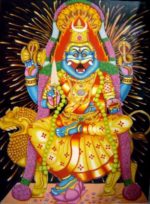
Temple Name:
Alternate Spellings:
Brahmapuram Sree Mahalakshmi Pratyungira Devi Temple | Atharvana Bhadrakali
Listing Category
Significance:
She is worshipped to bounce any ill effects caused by black magic (Abhichara), evil eyes/ words (curses) etc
Location:
Sasthamangalam, Trivandrum
Address:
Brahmapuram Sree Mahalakshmi Pratyangira Temple, Sasthamangalam, Trivandrum – 10
10
10
District:
Thiruvananthapuram
Google Tag:
8.5149° N, 76.9720° E
Phone No:
0471-2724969 +919895559402
Temple Timings:
0471-2724969, +919895559402
Temple Type:
Other
If Other is Chosen, pls specify:
Independent
Presiding deity:
Pratyangira Devi
Sub Deities:
NA
Offerings:
This temple does Amavasya pooja and Pratyangira poojas.
The most important rituals here are doing pradakshinam of the Devi 12 times with a coconut in hand and then breaking it.
A Homam is also performed on Amavasya Days.
The most important rituals here are doing pradakshinam of the Devi 12 times with a coconut in hand and then breaking it.
A Homam is also performed on Amavasya Days.
History:
The avatar of Narasimhi or Prathyangira Devi has two different concepts in Hindu mythology.
The story of Maha Pratyangira : Narasimha after killing Hiranyakashipu was still angry and all the devas couldnt control his anger and rage. To ensure that Hiranyakasipu’s brand of evil is forever banished from the universe, Narasimha consumed every drop of Hiranyakashipu’s blood and then wore the demon’s mangled body as a garland. So the devas went to Lord Siva and he took his gory from of sarabha. Narasimha and Sarabha had a long fight, but some what was still uncontrollable. To bring the whole thing in peace, from sarabha’s third eye he made a even more gory form of Maha Pratyangira. Even by the sight of Her, narasimha and all became cool. Her ugra roar made all things calm.
Narasimhi is one of the Matrikas or Mother Goddess of Hinduism. Goddess Narasimhi is regarded as the power of Lord Narasimha, the lion-man avatar of Mahavishnu. The goddess is popularly worshiped by the name Pratyangira Devi, the goddess with a lioness’s face and a human body. She is also known as Atharvana Bhadrakali and Narashimhika (in Kalisahasranama Stotram). The goddess is depicted with four hands holding Trishula (trident), Shankha (conch shell), Chakra (discus), Gada (mace). However in some scriptures, Narasimhi is said to have 2,000 hands with multiple weapons and a thousand tongues.
According to Vaishnavites, Goddess Lakshmi took the form of Narasimhi to calm down the rage of Narasimha after killing Hiranyakashyupu.
According to Shaivaite, she is an incarnation of Goddess Shakti and she appeared from the wings of Sarabheswara, the ugra avatar of Lord Shiva
The story of Maha Pratyangira : Narasimha after killing Hiranyakashipu was still angry and all the devas couldnt control his anger and rage. To ensure that Hiranyakasipu’s brand of evil is forever banished from the universe, Narasimha consumed every drop of Hiranyakashipu’s blood and then wore the demon’s mangled body as a garland. So the devas went to Lord Siva and he took his gory from of sarabha. Narasimha and Sarabha had a long fight, but some what was still uncontrollable. To bring the whole thing in peace, from sarabha’s third eye he made a even more gory form of Maha Pratyangira. Even by the sight of Her, narasimha and all became cool. Her ugra roar made all things calm.
Narasimhi is one of the Matrikas or Mother Goddess of Hinduism. Goddess Narasimhi is regarded as the power of Lord Narasimha, the lion-man avatar of Mahavishnu. The goddess is popularly worshiped by the name Pratyangira Devi, the goddess with a lioness’s face and a human body. She is also known as Atharvana Bhadrakali and Narashimhika (in Kalisahasranama Stotram). The goddess is depicted with four hands holding Trishula (trident), Shankha (conch shell), Chakra (discus), Gada (mace). However in some scriptures, Narasimhi is said to have 2,000 hands with multiple weapons and a thousand tongues.
According to Vaishnavites, Goddess Lakshmi took the form of Narasimhi to calm down the rage of Narasimha after killing Hiranyakashyupu.
According to Shaivaite, she is an incarnation of Goddess Shakti and she appeared from the wings of Sarabheswara, the ugra avatar of Lord Shiva
Updated on:
05/07/2019 by Komal
Temple Name:
Alternate Spellings:
Chittoorkavu Bhadrakali
Listing Category
Location:
Chittoor
Address:
Palakkad Chittur Rd, Anikode, Chittur-Thathamangalam, Kerala
District:
Palakkad
Google Tag:
10°42’13″N 76°44’17″E
Phone No:
096457 41079
Email id:
NA
Temple Timings:
Tuesday & Friday 5.00 am to 10.00 am | 5.30 pm to 7.30 pm
Temple Type:
Other
Presiding deity:
Goddess Durga in her formidable form
Sub Deities:
NA
History:
The legend about the divine birth of Devi Kali is as follows:- Daruka was a wicked demon. He conquered the three worlds with the miraculous boon that he obtained from Brahma. The Devas suffered much due to continual torment of the demon. Consequently, Lord Siva became angry and out of his fire of anger there existed the goddess Kali, who was entrusted with the work of killing the demon Daruka. Queen Daruki was the wife of demon and the queen of Forest And she was a devotee of Devi Parvati. The demon shumbh and nishumbha insist to Daruka to insist queen daruki to call Devi Kali ( they don't even know Parvati itself is Kali ) when queen Daruki called Devi Parvati with her devotion. Then Kali got angry with king Darukas behaviour towards women and killed him in spite of his wife's request to forgive him but he got killed as he has insulted the women. From this instance demon shumbh and nishumbha ran away.
Updated on:
05/07/2019 by Komal
Temple Name:
Listing Category
Significance:
It is the one and only Saraswathi temple to do Vidhyarambam on every day.
One of the uniqueness of the temple is the daily Kashaya Nivedyam during the Atthazha Pooja (at 7.30 pm).It is a precious medicine that cures all the problems physical, phychological and intellectual. The leading attraction of this temple is the sanctum that stands in the middle of a lotus pond.
One of the uniqueness of the temple is the daily Kashaya Nivedyam during the Atthazha Pooja (at 7.30 pm).It is a precious medicine that cures all the problems physical, phychological and intellectual. The leading attraction of this temple is the sanctum that stands in the middle of a lotus pond.
Location:
North Paravur
Address:
Main, Post Office Road, Kacheripady, North Paravur, Kerala
District:
Ernakulam
Google Tag:
10.146616°N 76.232001°E
Email id:
dhakshinamookambika@gmail.com
Temple Timings:
5am-11am | 5pm – 8pm
Temple Type:
Dewaswom
Presiding deity:
Goddess Saraswati
Sub Deities:
Ganapathy, Subrahmanyan, Mahavishnu, Yakshi, Hanuman and Veerabhadran
Festivals:
The famous Navaratri festival is celebrated here with great fervor. Thousands of people participate in the Navaratri music festival. On Durgashtami, books are arranged before the image of Goddess Saraswathy and on Vijayadashami morning, Ezhuthinirithu or Vidyāraṃbhaṃ ceremony takes place at a special mandapam which goes from 4 am to 11 am. Thousands of little children are initiated into the world of letters by making them write the word harisree on rice, their tongues or sand with a golden ring.
History:
As per local legend, the deity in the temple was consecrated by Paravur Thampuram. He used to visit Mookambika in Karnataka for worship once in a year. In one year, he prayed to the Goddess saying that he might not be able to visit next year to old age. It is said Goddess Mookambika came along with Thampuram. (Mookambikayil ninnum bhajichu kondu vannu kudiyiruthi).
Updated on:
05/07/2019 by Komal
Temple Name:
Alternate Spellings:
Ernakulathappan Temple
Listing Category
Significance:
The temple, dedicated to Lord Shiva, is considered as the city temple, with the presiding deity as the protector of the city, as per local Hindu faiths and traditions.
Location:
Ernakulam
Address:
Durbar Hall Rd, Marine Drive, Ernakulam, Kerala
District:
Ernakulam
Google Tag:
9°58′6.7″N 76°16′56.8″E
Phone No:
0484-2370415 2369804
Email id:
ernakulamsivatemple@gmail.com
Temple Timings:
3:30am – 11am | 4pm – 8pm
Temple Type:
Dewaswom
Presiding deity:
Lord Shiva in Gourisankara form considered to be Swayambhoo (Divinely derived).
Sub Deities:
Lord Ganesha, Parvathi Devi, Lord Ayyappa and Nagaraja
Offerings:
1.Wreath 2. Lucky Wreath 3. Unity Wreath 4. Swayamvara Wreath 5. Mrityayunya Wreath 6. 108 Vilvadalarchana 7. 108 Vilvadalarchana 8. Palpayasam 9. Neypayasam 10. Special Neypayasam 11.Koottupayasam 12. Offering 13. Dhara 14. Anointing of sorrow 17. Noorumpaalum 18. Karukahomam 19. Mrityayunyayahomam 20. Mahanmyatunjyayahomam 21. Ganapatihomam 22. Ashtadravya Ganapatihomam 23. Bhagavata Seva 24. One day pooja 25. Bread
Festivals:
Annual Festival in the month of Makaram (Malayalam Calendar) Shivaratri
History:
The history of the shrine is linked with the history of the city. As per the legend, it was one of the 7 royal temples of Kochi Maharajas but now it is controlled by administration of Cochin Devasom Board. It is one of the 108 Shiva temples in Kerala dedicated by Lord Parasurama.
Updated on:
05/07/2019 by Komal
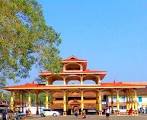
Temple Name:
Alternate Spellings:
Ettumanur
Listing Category
Significance:
For general well-being | To get rid of illness
Location:
Ettumanoor
Address:
Ettumanoor, Kottayam, Kerala
District:
Kottayam
Google Tag:
9.673611, 76.56
Phone No:
0481 271 9375
Temple Timings:
04:00 AM – 11:30 AM, 05:00 PM – 08:00 PM
Temple Type:
Dewaswom
Presiding deity:
Shiva as Ettumanoorappan
Sub Deities:
Bhagavathi, Sastha, Dakshinamoorthy, Ganapathy and Yakshi
Festivals:
Thirulsavam in Kumbham
Updated on:
05/07/2019 by Komal
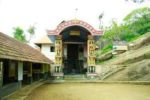
Temple Name:
Alternate Spellings:
Dakshina Kailasam
Listing Category
Significance:
Stamping on fried pappads is done for the healing of diseases on feet
Location:
Mullurkara
Address:
Irunilamkode Temple, Mullurkara P.O.,Thrissur, Kerala
680583
680583
District:
Thrissur
Google Tag:
10°42'44"N 76°15'27"E
Phone No:
91-9947-472-287 | 04884 273483 | 9847 558782
Website:
Email id:
mail@irunilamkodetemple.com
Temple Timings:
5 am to 12 noon and 5 pm to 7 pm
Temple Type:
Other
If Other is Chosen, pls specify:
Archaeological survey of India
Presiding deity:
Siva
Sub Deities:
Vishnu, Devi Parvati, Murugan, Ganapathi, Ayyappan
Offerings:
The offering (Vazhipads) conducted here are very strange and rare. More than 30 items of vazhipads are held here. PAPPADAM CHAVITTAL (Stamping on fried pappadams) is one among the popular vazhipad. This is done for the healing of diseases on the feet. CHOOL VAZHIPAD is another popular one (brooming over the head and neck). This is done for the abnormal falling of hairs found in ladies.
Festivals:
Skanda Shashti, Mahashivarathri The main festival celebrated here is ' SKANTHA SHASHTY'. It falls in October or November every year. A number of 'KAVADI's in sets come to the temple yard with singing, dancing and beating on drums with a competitive spirit. The participants are given a small amount as a token to their efforts.
"THAIPOOYAM" is another festival observed here.
ANNADANAM (Serving of free food) is the main activity of temple. Near about 300-400 devotees are given free food daily. A decorated chariot installed with an idol of Sri Subramaniyaswamy mounted on a mini lorry goes round the whole panchayath, house to house. This function is called 'OORUCHUTTAL'. The concept is that the lord visits his devotees houses and bless them.
"THAIPOOYAM" is another festival observed here.
ANNADANAM (Serving of free food) is the main activity of temple. Near about 300-400 devotees are given free food daily. A decorated chariot installed with an idol of Sri Subramaniyaswamy mounted on a mini lorry goes round the whole panchayath, house to house. This function is called 'OORUCHUTTAL'. The concept is that the lord visits his devotees houses and bless them.
History:
For, thousands of years, this temple was unknown and unseen to the public. About 300 years ago some villagers located it accidentally. One day, when it was raining a lady worker went inside the cave. There she started sharpening her sickle. Meanwhile she found a red liquid on her finger tip and feared, it was cut, she checked it. But she could find no mark of any injury.With anxiety and curiosity she observed the rock part where she sharpened her sickle. To her great surprise, she saw the same liquid slowly coming out drop by drop. Her anxiety grew up. She ran to the villagers and told them about the incident with a choking voice and sobs. They immediately rushed to the spot with thrilling hearts. They found the rock site, watched keenly and carefully.They saw the same liquid coming out.They started removing the bushes grass and creepers slowly and carefully. They convinced the presence of some super human power there. They were stunned when they saw the complete shape of the deity. Some of them went into ecstasy. With folded hands they paid their respects and ‘Pranams’ to the Lord.
This temple is renowned for religious harmony. Regardless of caste or creed persons could enter the temple and perform the worship themselves. They were free to touch the lord’s feet. Even before Kerala temple entry promulgation, perhaps, Irunilamkode temple stood first in the history of religious harmony. A number of devotees, not only from Kerala but from Tamilnadu and Karnataka also visited the temple. MUNIYARA (DHAKSHINAKAILASAM) is a small man-made cave (Muni-hermit;ara-cave). It is at the top of the hill-lock. There were other similar types of caves here. They have been demolished by natural erosive powers. The only one cave now retaining is under the protection of the temple authorities. An idol of 'Sivalinga is installed and worshiped inside this cave. Devotees visiting the temple are also expected to visit this cave also to fulfill the purpose of their visit.
The histories of these caves are marvellous and interesting. Long ago ardent devotees from various parts of the country highly intoxicated with God fervor came here. They stayed here and practiced rigorous spiritual sadhanas. They built these caves with the help of villagers to protect themselves from hot sun, cold and wild animals. The villagers fed them and met other necessities. So they could merge in their sadhanas full time deeply. As a result some of them got realization or vision of God. The rest of their life stayed here giving spiritual advises those who approached them.
In course of time these seekers attention was diverted to some other centres. Subsequently these caves and rock remained isolated and uncared.
This temple is renowned for religious harmony. Regardless of caste or creed persons could enter the temple and perform the worship themselves. They were free to touch the lord’s feet. Even before Kerala temple entry promulgation, perhaps, Irunilamkode temple stood first in the history of religious harmony. A number of devotees, not only from Kerala but from Tamilnadu and Karnataka also visited the temple. MUNIYARA (DHAKSHINAKAILASAM) is a small man-made cave (Muni-hermit;ara-cave). It is at the top of the hill-lock. There were other similar types of caves here. They have been demolished by natural erosive powers. The only one cave now retaining is under the protection of the temple authorities. An idol of 'Sivalinga is installed and worshiped inside this cave. Devotees visiting the temple are also expected to visit this cave also to fulfill the purpose of their visit.
The histories of these caves are marvellous and interesting. Long ago ardent devotees from various parts of the country highly intoxicated with God fervor came here. They stayed here and practiced rigorous spiritual sadhanas. They built these caves with the help of villagers to protect themselves from hot sun, cold and wild animals. The villagers fed them and met other necessities. So they could merge in their sadhanas full time deeply. As a result some of them got realization or vision of God. The rest of their life stayed here giving spiritual advises those who approached them.
In course of time these seekers attention was diverted to some other centres. Subsequently these caves and rock remained isolated and uncared.
Updated on:
23/11/2018 by Smitha